
Lecturers
Andrea Baronchelli
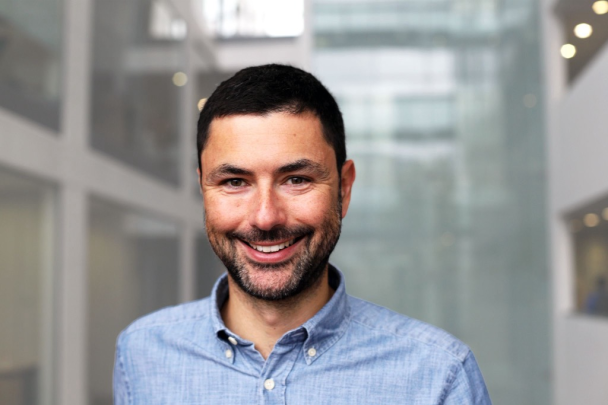
Andrea Baronchelli is Professor of Complexity Science at City St George’s, University of London, and a Research Associate at the UCL Centre for Blockchain Technologies.
His research asks how interacting agents, human and artificial, develop and inhabit shared realities: the conventions, norms and collective structures through which groups coordinate, assign meaning and create value.
He combines large-scale data analysis, mathematical modelling and controlled experiments with human participants and AI agents. His work, spanning multi-agent AI systems, social media and blockchain ecosystems, has appeared in Nature, Science and PNAS and is cited in over 100 policy documents.
He led the Token Economy theme at The Alan Turing Institute until 2025, and received the German Physical Society’s Young Scientist Award for Socio- and Econophysics in 2019 and the Evolutionary Linguistics Association’s Lifetime Achievement Award in 2026.
Carla Sciarra
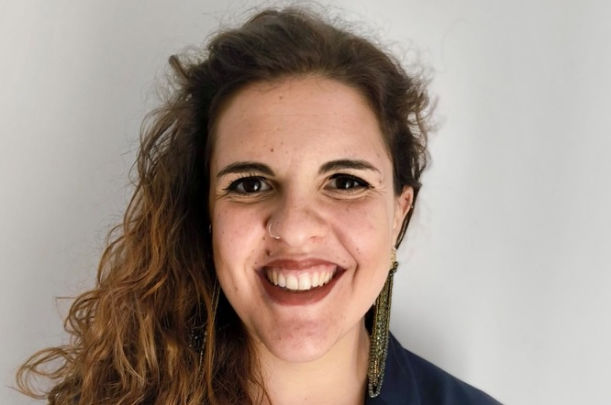
Carla Sciarra is an Economic Analyst at the European Commission’s Joint Research Centre (JRC) in Seville. Her science-for-policy research looks at the productive and technological capabilities that drive innovation, competitiveness and the low-carbon transition.
Her expertise lies in applying network science to complex systems, from epidemic spreading to innovation and sustainability performance. Her early work used network theory to model epidemic spreading, and to develop new measures of network centrality.
Her main contribution, “Reconciling contrasting views on economic complexity” (Nature Communications), unified competing approaches to measuring countries’ productive capabilities through the bipartite network linking countries to the products they export.
Before joining the JRC, she was an Assistant Professor at the Politecnico di Torino, where she also earned her PhD. She has been a visiting scholar at University College London, the University of California Berkeley, and the École Polytechnique Fédérale de Lausanne. She has also worked as an external consultant for funding institutions, multinational corporations and environmental consultancies.
A committed science communicator, she co-designed “Water to Food” in 2020, an award-winning science-communication project explaining the impact of agrifood systems on global water resources.
Federico Levi

Federico Levi is Deputy Editor, Physics and Computing at Nature. His studies began at the University of Milan, where he specialized in the dynamics of open quantum systems. He then obtained his PhD from the University of Freiburg where he studied entanglement theory and energy transfer in disordered systems, with a focus on identifying quantum effects in biological processes.
LECTURE at COMPLEXITY72H:
Miriam Redi

Research Science for Free KnowledgeBIO:
Miriam Redi is Research Manager at the Wikimedia Foundation and Visiting Research Fellow at King’s College London. Previously, she worked as a Research Scientist at Yahoo! Labs (Barcelona) and Nokia Bell Labs (Cambridge). She holds a PhD from EURECOM (Sophia Antipolis) and conducts research in social multimedia computing, with a focus on fair, interpretable, multimodal machine-learning systems for advancing knowledge equity.